Why Some Home Treadmills Need a Break After 30 Minutes
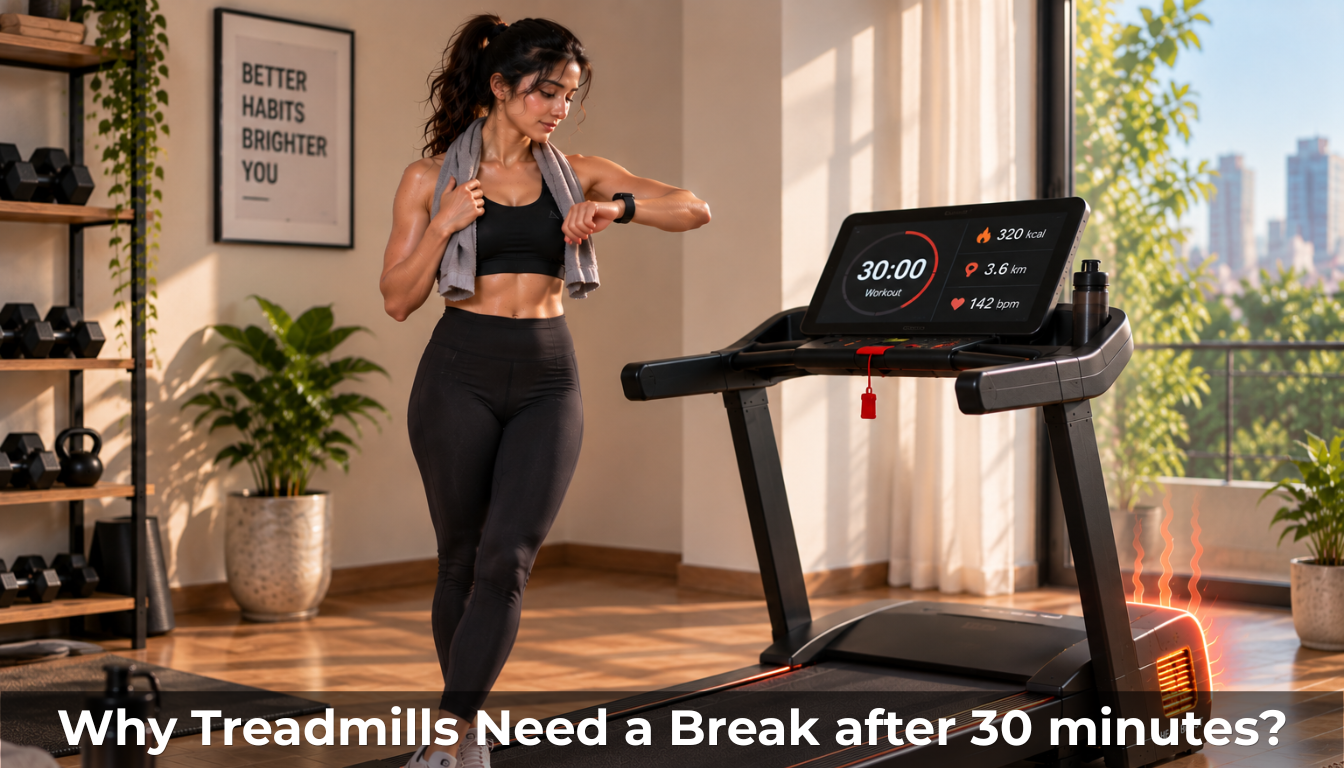
There is a small detail on some treadmill manuals that can catch you off guard: the machine may recommend a rest after a certain amount of continuous use. You buy a treadmill for home, expect to walk or run whenever you want, and then see a recommendation such as “30-40 minutes of continuous use.” That does not mean the treadmill is limited to 30 minutes of exercise a day. It usually means the machine has been designed around a particular continuous-use cycle. After running for a set period, it needs some time to rest before another session.And that distinction matters when you’re comparing a treadmill for Home.
What Does “30 Minutes of Continuous Use” Actually Mean?
A continuous-use recommendation refers to one uninterrupted session, not the total amount of exercise you can do throughout the day. For example, some home treadmills may be designed for a 30-40-minute session followed by a rest period. After that break, another session may be possible according to the manufacturer’s instructions. So if you walk for 30 minutes in the morning and use the treadmill again later, that’s very different from asking the machine to run continuously for several hours. The exact recommendation is model-specific. There isn’t a universal 30-minute limit for every home treadmill.
Why Does a Treadmill Need a Break?
A treadmill may look simple from the outside, but quite a lot is happening underneath the running belt. The motor continuously drives the belt while you walk or run. The machine is also dealing with your body weight, belt friction and the resistance created by movement. As the treadmill works, components can generate heat. A rest period gives the motor and other components time to cool before another prolonged session. This is one reason you shouldn’t judge a treadmill only by the horsepower number printed on its specification sheet. A 4 HP treadmill, for example, doesn’t automatically have the same operating characteristics as every other 4 HP treadmill.
Your Workout Changes the Workload
Thirty minutes of easy walking isn’t mechanically the same as 30 minutes of running. Speed matters. User weight matters. Incline can matter too. If you’re walking at a comfortable pace, the treadmill may be handling a relatively moderate workload. Increase the speed, add incline and use the machine close to its user-weight limit, and the demands on the system can change. This is why the manufacturer’s intended usage is worth paying attention to when you’re choosing a Best Treadmill For Home.
User Weight Matters Too
The maximum user weight printed on a treadmill is useful, but it shouldn’t be viewed in isolation. For example, the PowerMax TDM-96B Motorized Treadmill with Bluetooth is rated for a maximum user weight of 110 kg. It also has a 4 HP DC motor, a 1-14 km/h speed range, a 1100 × 400 mm running surface and PVC cushion shock absorption. The manufacturer also recommends considering a safety buffer for running activities. That last point is worth noticing. A treadmill being rated for a particular maximum weight doesn’t mean every type of workout will place the same demand on it. Walking, jogging and running create different workloads.
Speed and Incline Change Things
The treadmill doesn’t know whether you’re having an easy walk while watching a show or pushing through a fast incline workout. From the machine’s perspective, those are very different jobs. Higher speeds require the belt to move faster.Incline introduces another variable. Longer, harder sessions can also increase the workload over time. This doesn’t mean you should avoid speed or incline. It simply means that how you use the treadmill is part of the equation.
Does a 30-Minute Limit Mean the Treadmill Is Low Quality?
No. A continuous-use recommendation is better understood as part of the machine’s design and intended use. A home treadmill and a commercial treadmill don’t necessarily have the same job. A commercial treadmill in a busy gym may see one user finish and another immediately step on. It may operate repeatedly throughout the day. A home treadmill might be used for a 30-minute morning walk, another session after work and occasional jogging. Those are completely different usage patterns. So a home treadmill with a defined rest period isn’t automatically a poor choice. The more important question is:
What About DC Motor Treadmills?
Many home treadmills use DC motors, but the letters DC don’t tell you how long that particular treadmill can operate continuously. Motor type is one specification. The treadmill’s construction, speed range, running surface, user capacity, cooling, intended use and manufacturer’s operating guidance all contribute to how the machine should be used. The TDM-96B, for example, uses a 4 HP DC motor and is designed for walking, jogging and running at speeds from 1 to 14 km/h. Its product specifications also include 12 preset programs, Bluetooth connectivity and a hydraulic soft-drop folding system. The takeaway isn’t that every 4 HP DC treadmill has the same duty cycle. It is exactly the opposite: check the specifications for the specific treadmill you’re buying.
What Should You Check Before Buying?
Don’t stop at motor horsepower.
| Specification | Why It Matters |
| Continuous-use recommendation | Tells you how long the manufacturer recommends using the machine at one time |
| Motor type | Gives context about the treadmill’s design |
| User weight capacity | Helps you understand the intended load |
| Speed range | Important for walking, jogging or running |
| Running surface | Affects comfort and movement |
| Incline | Changes workout intensity and machine workload |
| Shock absorption | Can influence running and walking comfort |
| Warranty | Shows the manufacturer’s stated coverage |
| Maintenance requirements | Helps keep the treadmill operating properly |
These details tell you much more about whether a treadmill fits your lifestyle than a single horsepower figure.
Should You Stop After 30 Minutes?
If your treadmill’s manufacturer tells you to, yes. But don’t assume every home treadmill has the same restriction. Some models may specify a continuous-use period followed by a rest. Others may be designed for longer sessions. The correct answer is always found in the operating instructions or official product specifications for that particular model. And if your treadmill does require a break, don’t treat it as something to bypass. The rest period is part of how the manufacturer expects the machine to be operated.
FAQs
Why do some home treadmills need a break after 30 minutes?
Some home treadmills have a defined continuous-use cycle. A rest period allows heat generated during operation to dissipate before another session.
Can I use a treadmill again after the recommended break?
Follow the manufacturer’s instructions for your specific model. If another session is permitted after the stated rest period, the treadmill can be used again.
Can I exercise for more than 30 minutes on a home treadmill?
Yes, depending on the model. The important distinction is between total daily exercise and continuous use in one session.
Does higher horsepower mean longer continuous use?
Not necessarily. Horsepower is only one part of a treadmill’s design. Construction, motor type, user weight, speed, incline and the manufacturer’s duty-cycle guidance also matter.
Is a home treadmill suitable for long-distance running?
Some are, but you should specifically check the manufacturer’s continuous-use recommendations and specifications if long uninterrupted running sessions are part of your routine.
Final Takeaway
A “30-minute” recommendation on a home treadmill doesn’t mean you’re only allowed to exercise for 30 minutes. It tells you something about how the machine is designed to be used continuously. For someone who takes a 30-minute walk every evening, that may fit perfectly into the routine. For someone planning long, uninterrupted running sessions, it becomes a specification worth paying close attention to. So before buying a Treadmill Machine, look beyond the big horsepower number. Check the continuous-use guidance, user-weight capacity, speed range, running surface, incline and maintenance requirements. Because the right treadmill isn’t simply the one with the biggest numbers. It’s the one whose design makes sense for how you actually plan to use it.
Categories
Tags
Recent Posts
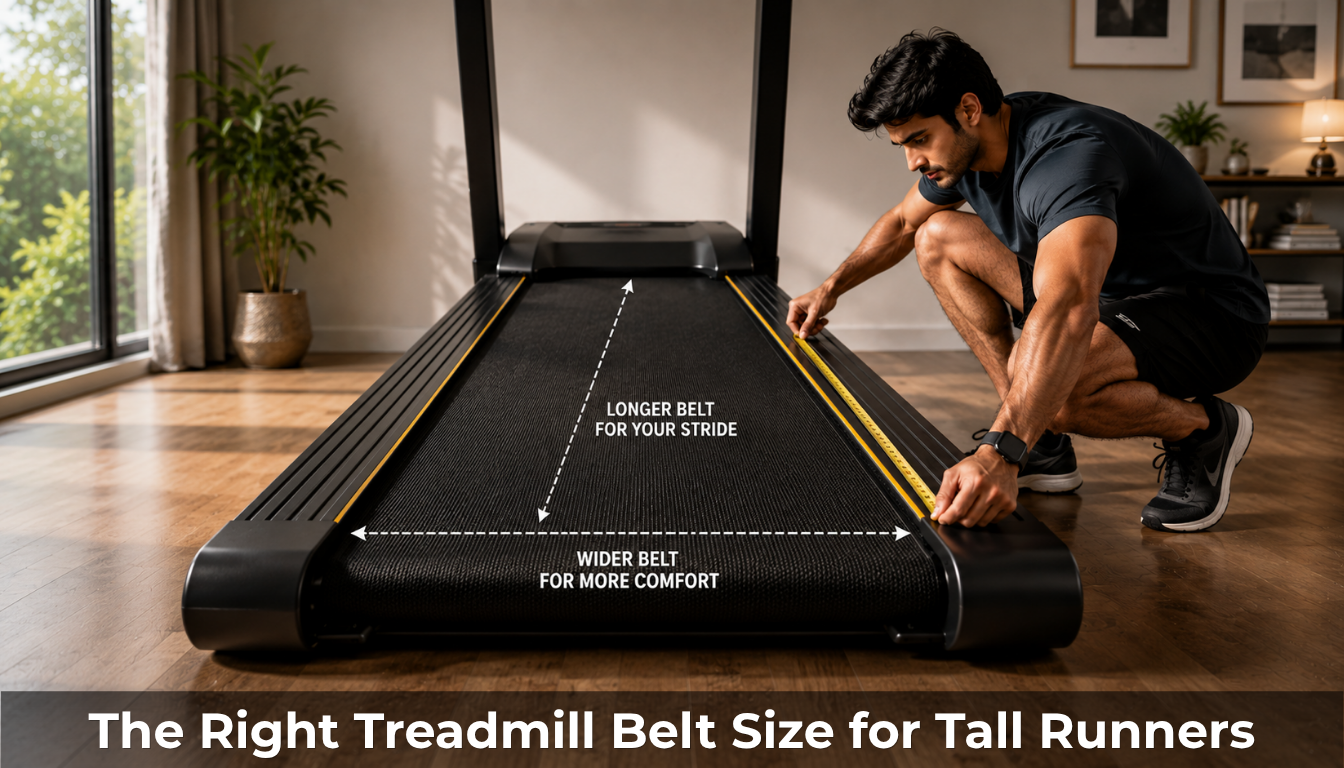
What Treadmill Belt Size Do Tall Runners Actually Need?
August 31, 2026
The Hidden Cost of Buying a Cheap Treadmill
August 11, 2026
Best Treadmills for Monsoon Training in India
July 30, 2026
Are Foldable Treadmills Worth It for Small Apartments?
June 30, 2026