
Treadmill Lubrication Guide: How Often Should You Lubricate Based on Usage?
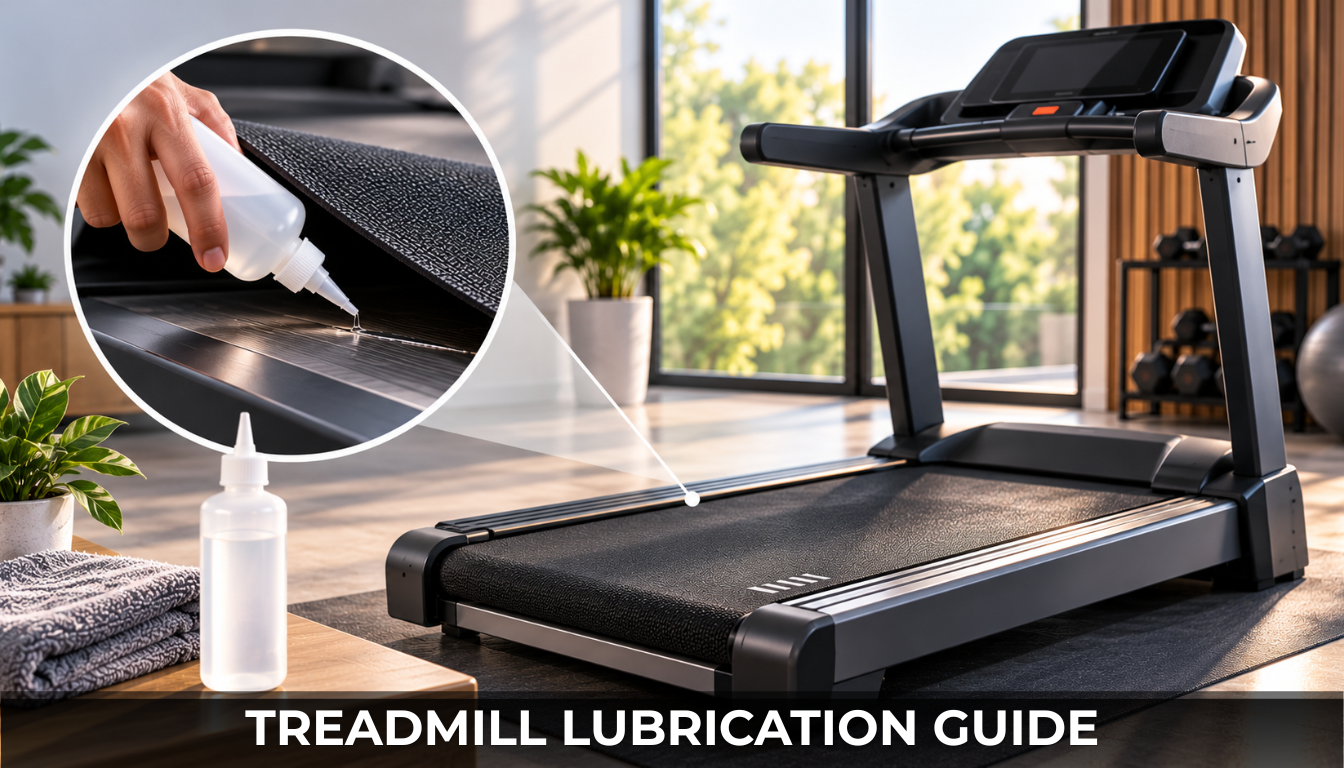
A treadmill might run smoothly for months before you notice something unusual. The belt feels less fluid, the machine sounds louder than usual, or your regular walking speed suddenly feels different. Sometimes, the problem comes down to something surprisingly simple: treadmill lubrication. Lubricating the running belt is an important maintenance task for many home treadmills. It helps reduce friction between the belt and deck, allowing the machine to operate smoothly while reducing unnecessary strain on its components. But here’s where things get confusing. Some manufacturers recommend lubrication every three months, others suggest six months, and certain treadmills don’t require users to apply lubricant at all.
So, how often should you lubricate a treadmill based on usage? Let’s look at the manufacturer recommendations, maintenance intervals and practical signs that matter.
What Is Treadmill Lubrication and Why Does It Matter?
Treadmill lubrication involves applying a compatible lubricant between the running belt and deck on machines designed to require periodic lubrication. Every time you walk or run, the belt moves over the deck. This creates friction, which is managed through the treadmill’s belt material, deck surface and lubrication system. When a treadmill that requires lubrication becomes too dry, friction can increase. Over time, this may contribute to belt wear, additional motor workload and increased operating temperatures. Proper treadmill belt lubrication can help maintain smooth operation and protect the machine from avoidable wear. However, not every treadmill requires manual lubrication. Some models use factory-lubricated or maintenance-free belt systems, making it important to check the owner’s manual before applying any oil.
How Often Should You Lubricate a Treadmill?
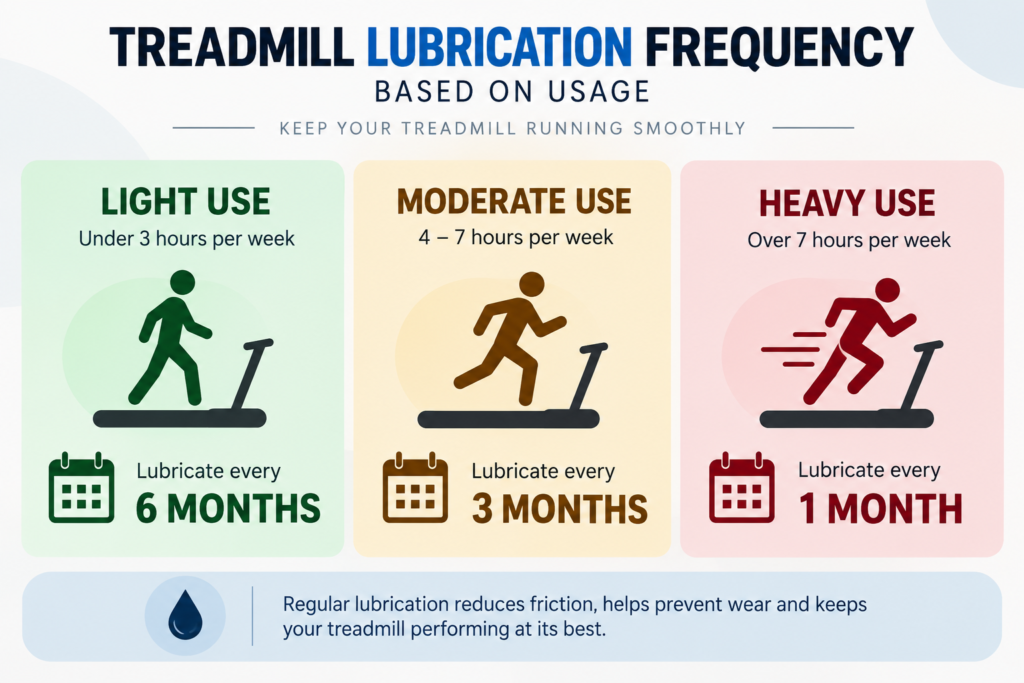
There isn’t one lubrication schedule that applies to every treadmill. The right interval depends on weekly operating hours, treadmill design, lubricant type and the manufacturer’s maintenance recommendations. For treadmills that require regular lubrication, the following is an example of a usage-based maintenance schedule.
| Weekly Treadmill Usage | Example Lubrication Interval |
| Light use – under 3 hours | Every 6 months |
| Moderate use – 4-7 hours | Every 3 months |
| Heavy use – over 7 hours | Every month |
This schedule reflects general usage-based guidance published by PowerMax. It should not be applied automatically to treadmills from other manufacturers or to models with different maintenance instructions. For example, someone using a treadmill for 30 minutes three times a week accumulates approximately 1.5 hours of use. Another household using the same treadmill for an hour every day accumulates seven hours weekly. The second machine may reach its recommended maintenance interval much sooner. The key is to base treadmill lubrication frequency on the actual operating time and the instructions for your model.
What Do Different Treadmill Brands Recommend?
This is where comparing manufacturers becomes useful. Although many home treadmills require lubrication, brands don’t necessarily recommend the same interval or application method.
PowerMax: Usage-Based and Model-Specific Guidance
PowerMax provides general lubrication recommendations based on how frequently the treadmill is used. Its silicone lubricant instructions also recommend applying lubricant after 55 operating hours or three months, whichever comes first. However, individual treadmill models may have different instructions, particularly when they include semi-auto lubrication systems.
Horizon Fitness: Time or Distance-Based Lubrication
Horizon Fitness recommends lubricating the running belt every three months or 150 miles, approximately 241 kilometres, for applicable models. This illustrates another approach to treadmill maintenance: instead of relying only on weekly exercise hours, some manufacturers use distance travelled as a maintenance reference.
Sunny Health & Fitness: Six Months or 150 Miles
Sunny Health & Fitness provides guidance for applicable treadmills recommending lubrication every six months or 150 miles. Its maintenance instructions also explain how to apply silicone-based treadmill lubricant beneath the running belt.
NordicTrack: Some Models Use Pre-Lubricated Belts
Certain NordicTrack treadmills use belts with factory-applied lubricant. For those models, the manufacturer warns users against applying silicone spray or other substances unless instructed by an authorised service representative. This is an important reminder that lubrication isn’t always something owners should perform themselves.
What Does This Comparison Tell Us?
The differences between PowerMax, Horizon Fitness, Sunny Health & Fitness and NordicTrack demonstrate one important point: The best treadmill lubrication schedule is the one recommended for your particular machine, not a generic interval copied from another brand.
How to Calculate Treadmill Lubrication Frequency Based on Usage
Some manufacturers specify lubrication intervals in operating hours rather than calendar months. For example, PowerMax’s silicone lubricant instructions refer to 55 hours of operation or three months, whichever comes first.
Here’s how quickly a treadmill could reach 55 operating hours depending on weekly usage.
| Weekly Usage | Time to Reach 55 Hours |
| 2 hours | Approximately 27.5 weeks |
| 4 hours | Approximately 14 weeks |
| 5 hours | 11 weeks |
| 7 hours | Approximately 8 weeks |
| 10 hours | 5.5 weeks |
Remember that if your treadmill’s instructions also specify a three-month limit, you should follow whichever comes first. This calculation is particularly useful for households where several people use the same home use treadmill. A simple maintenance record noting operating hours and lubrication dates can help prevent missed servicing.
Signs Your Treadmill May Need Lubrication
Even when you’re following a maintenance schedule, it’s useful to recognise possible signs of increased belt friction.
1. The Running Belt Feels Less Smooth
If the belt begins moving unevenly or feels unusually resistant, lubrication may be one possible cause. However, belt tension, alignment and worn components can create similar symptoms.
2. Unusual Operating Noise
A treadmill that becomes noticeably louder may require inspection. Increased friction can contribute to operating noise, but squeaking, grinding or knocking sounds can also indicate mechanical problems unrelated to lubrication.
3. A Dry Belt and Deck
On models where the manufacturer recommends checking beneath the running belt, a dry contact surface may indicate that lubrication is due. Always switch off and unplug the treadmill before inspecting it.
4. Excessive Heat or Unexpected Shutdowns
Increased belt friction can contribute to mechanical strain and heat buildup. However, overheating, repeated shutdowns or burning smells should not be treated as simple lubrication problems. Stop using the treadmill and seek appropriate service.
How to Lubricate a Treadmill Belt Safely
The correct method depends on the treadmill’s design and the manufacturer’s instructions.
For compatible treadmills requiring owner-applied silicone lubricant, the general process is:
- Switch off and unplug the treadmill. Allow the machine to cool before beginning maintenance.
- Check the owner’s manual. Confirm the approved lubricant type, quantity and application method.
- Access the running deck. Lift or adjust the belt only as instructed for your model.
- Apply the treadmill lubricant. Use the specified amount in the recommended area beneath the running belt.
- Distribute the lubricant. Follow the manufacturer’s instructions for running the belt briefly after application.
- Check the belt. Make sure it moves smoothly and tracks correctly.
Do not loosen roller bolts or adjust belt tension unless the manual specifically requires it.
Which Treadmill Lubricant Should You Use?
Choosing the correct treadmill lubricant is just as important as knowing when to apply it. Many home treadmills that require periodic lubrication use manufacturer-approved silicone oil. However, some models have different lubrication requirements. One example is the PowerMax PMS-200 Silicone Oil Treadmill Belt Lubricant, a silicone-based product intended for compatible treadmill belt and deck maintenance. Its published instructions recommend lubrication after 55 hours of use or three months, whichever occurs first. Before using any treadmill silicone oil, confirm that the treadmill manufacturer approves that type of lubricant. Avoid using cooking oil, automotive lubricants or general-purpose sprays unless they are specifically approved for your treadmill. The correct lubricant is not necessarily the most expensive product. It’s the one compatible with your machine.
Do Semi-Auto Lubrication Treadmills Need Maintenance?
Yes. A semi-auto lubrication system can make belt maintenance more convenient, but it doesn’t eliminate the need for regular servicing. For example, the PowerMax TDM-100M Semi-Auto Lubrication Multifunction Treadmill includes a semi-auto lubrication feature. PowerMax’s product guidance describes using the supplied silicone oil approximately every 20-25 days, depending on usage, with the detailed maintenance procedure provided in the user guide.
This is a useful example of why individual product instructions matter. A semi-auto lubrication system is not the same as a maintenance-free running belt. Owners should still monitor lubricant requirements, belt condition and the manufacturer’s recommended maintenance intervals.
Can You Over-Lubricate a Treadmill?
Yes. More lubricant doesn’t automatically mean better protection. Applying too much treadmill lubricant can allow excess oil to spread beyond the intended contact area, potentially contaminating components or creating belt-related problems. Over-lubrication can also make it harder to identify other maintenance issues. The safest approach is to use the correct lubricant, in the recommended quantity, at the specified interval. If your treadmill is making an unusual noise, don’t immediately assume adding more oil will solve it.
Common Treadmill Lubrication Mistakes
Using the wrong lubricant: Not all treadmill belts are compatible with the same products.
Ignoring operating hours: A treadmill used daily may reach its lubrication interval much faster than a lightly used machine.
Lubricating too frequently: Excessive application can create maintenance problems rather than prevent them.
Waiting for unusual noises: Lubrication is preventive maintenance, and some problems may develop before obvious symptoms appear.
Assuming semi-auto means maintenance-free: Semi-auto systems still require appropriate lubricant and maintenance.
Ignoring the owner’s manual: Manufacturer-specific instructions should always take priority over generic online advice.
Does Treadmill Lubrication Help Protect the Motor?
On treadmills designed for periodic lubrication, maintaining the appropriate belt-to-deck lubrication can help reduce unnecessary friction and mechanical workload. When the belt moves smoothly, the motor doesn’t have to work against avoidable resistance from a dry running surface.
However, lubrication cannot repair worn rollers, damaged electronics, incorrect belt tension or motor faults. Good treadmill maintenance also involves cleaning, checking belt alignment, inspecting wear and following the manufacturer’s operating recommendations.
Final Verdict: How Often Should You Lubricate Your Treadmill?
Treadmill lubrication frequency should depend on usage, treadmill design and the manufacturer’s maintenance instructions. Some machines use calendar-based intervals, while others specify operating hours or distance. Certain factory-lubricated treadmills may not require owner-applied lubricant at all. PowerMax, Horizon Fitness, Sunny Health & Fitness and NordicTrack illustrate why there is no universal maintenance schedule. The practical approach is simple: check your manual, track your usage, inspect the machine as instructed and use only an approved treadmill lubricant. Good treadmill maintenance isn’t about applying more oil. It’s about applying the right amount at the right time.
Frequently Asked Questions
How often should I lubricate my treadmill?
The interval depends on the manufacturer and model. Some treadmills require lubrication every three months, while others use operating-hour or distance-based schedules.
What is the best treadmill lubricant?
The best treadmill lubricant is the type approved by your treadmill manufacturer. Many compatible home treadmills use silicone-based lubricant, but some factory-lubricated systems should not receive additional oil.
How do I know if my treadmill belt needs lubrication?
Check the manufacturer’s maintenance schedule and inspect the belt as instructed. Unusual friction, inconsistent belt movement or increased noise may justify inspection, although these symptoms can have other causes.
Can I lubricate my treadmill every month?
Yes, if the manufacturer’s guidance calls for monthly lubrication. Otherwise, applying lubricant too frequently may cause problems.
How many hours can a treadmill run before lubrication?
There is no universal limit. Some PowerMax lubricant instructions specify 55 hours or three months, whichever comes first. Other manufacturers may recommend different intervals.
Do semi-auto lubrication treadmills need silicone oil?
Many semi-auto systems require lubricant, but the exact type and application procedure depend on the treadmill. Always follow the model-specific instructions.
What happens if I don’t lubricate my treadmill?
On machines that require lubrication, insufficient lubricant can increase friction, heat and component wear. However, maintenance-free belts may have different requirements and should not be lubricated without manufacturer approval.
Categories
Tags
Recent Posts
Best Treadmills with Good After-Sales Service in India
September 29, 2026
Why Some Home Treadmills Need a Break After 30 Minutes
September 16, 2026
Does 15-Level Incline Mean a 15% Incline?
September 11, 2026
What Treadmill Belt Size Do Tall Runners Actually Need?
August 31, 2026